



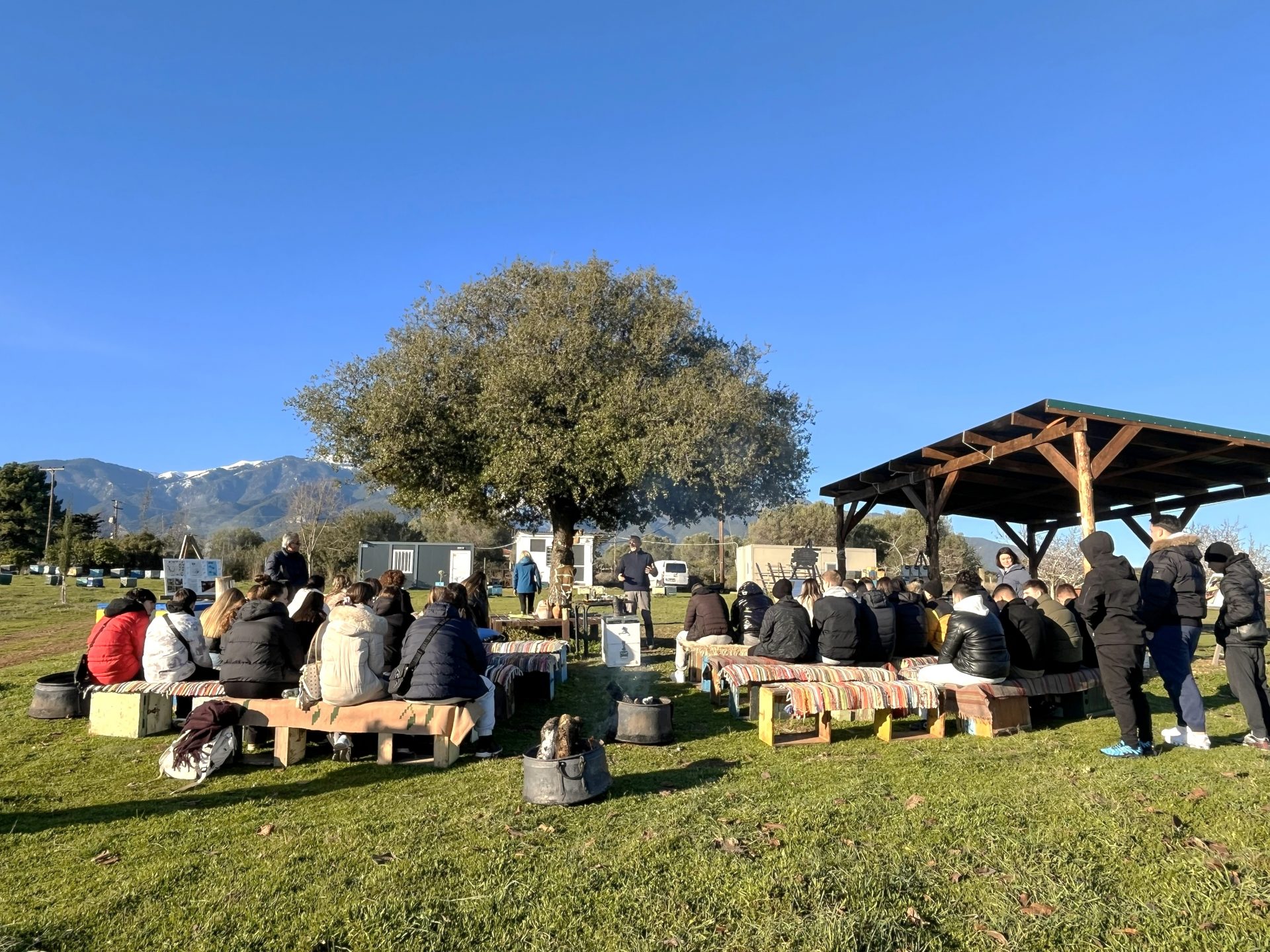
Bringing Greek students closer to today’s farming reality through hands-on farm visits and direct exchanges with farmers
Students from the Vocational Upper Secondary School (EPAL) of Katerini had the opportunity to participate in an educational field trip to two modern agricultural farms in Greece. This initiative was carefully organised to complement their vocational training and to enrich their understanding of contemporary agricultural practices. The visits were part of a broader effort under the European Re-imagine CAP (RECAP) project to raise awareness among young people about the strategic priorities of the Common Agricultural Policy (CAP), with a particular focus on sustainable and innovative farming and the importance of generational renewal in agriculture. By observing first-hand how modern farming methods are applied in practice, students gained a concrete understanding of how CAP objectives are translated into real-world agricultural production. The experience enabled them to better appreciate the vital role of environmental stewardship, sustainable production, and technological innovation in shaping the future of European agriculture.
Gea Olympou: Traditional Beekeeping with a Modern Sustainable Vision
The first stop was “Gea Olympou” (Land of Olympus) in Litohoro, a small family-owned estate specialising in honey production. The farm combines traditional methods with modern analytical techniques to ensure the safety, quality and consistency of its products. It also exemplifies the CAP’s commitment to sustainable rural development, through practices that protect the environment and support local value chains.
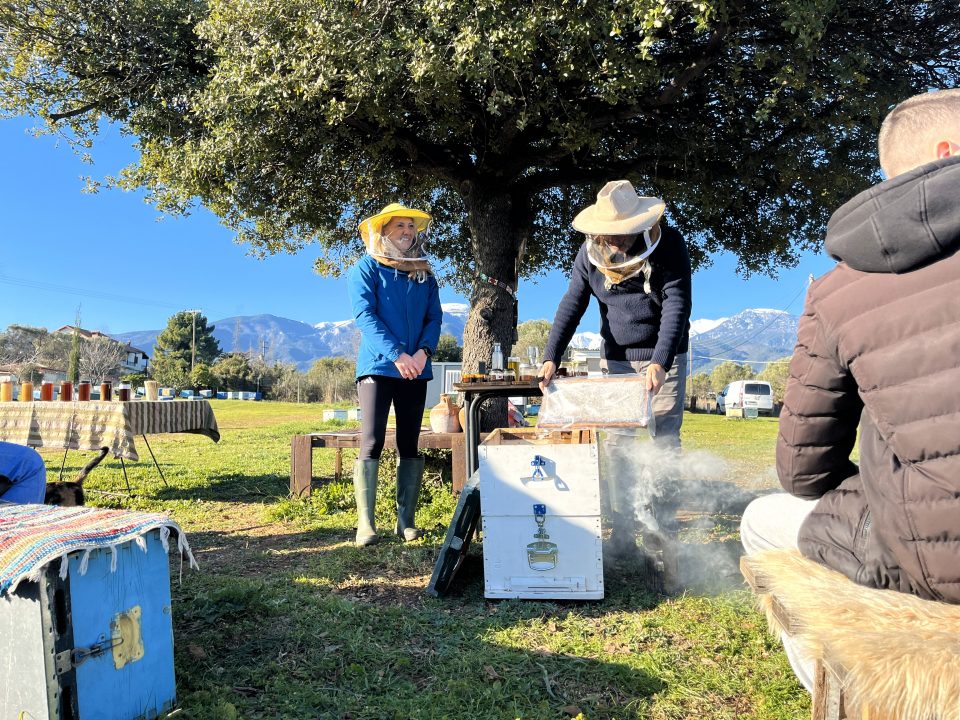
Situated at the foothills of Mount Olympus, the estate began as a small piece of land and gradually developed into a model of sustainable agricultural entrepreneurship. The heart of the farm is its beekeeping operation, where principles of good beekeeping are combined with migratory practices and traditional Greek honey production methods to produce “Gea Olympou Honey”. The farm’s diverse production, derived from different flowers and honeydews, results in a range of honey varieties with authentic, natural flavours. In addition, the farm produces other bee products, such as fresh polyfloral pollen and royal jelly.
The farm’s main crops include olive, walnut and almond trees, cultivated according to sustainable agricultural practices that prioritise biodiversity, resource efficiency and environmental protection. These practices reflect the CAP’s broader objective of supporting farming systems that are both productive and ecologically responsible.
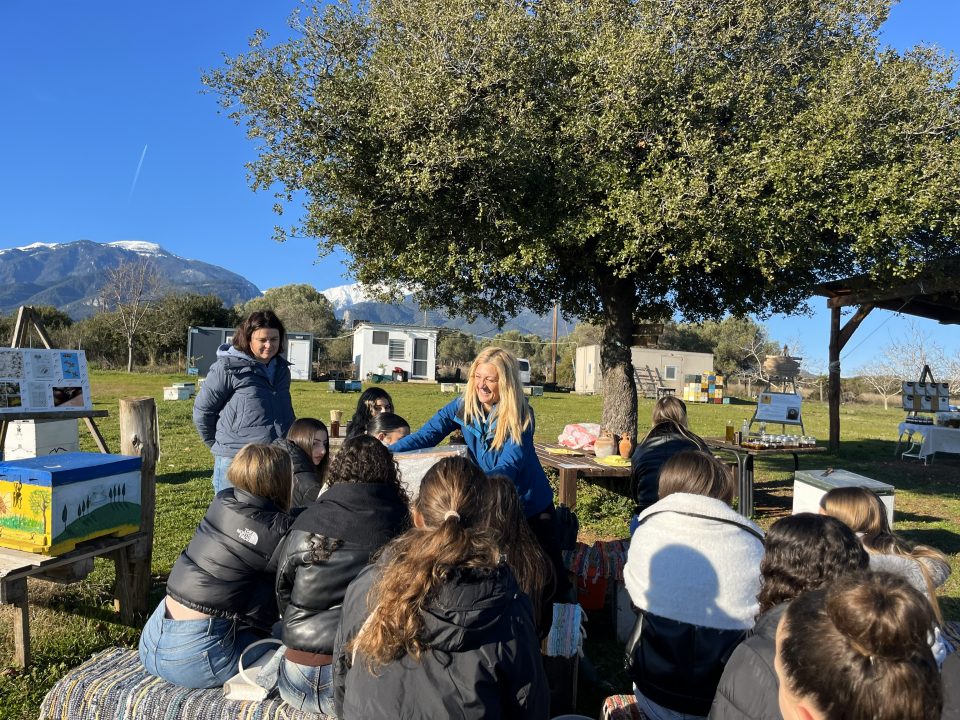
The farm’s mission is to cultivate and produce fresh, high-quality products while respecting nature and people. Through their work, the farm seeks to protect biodiversity, preserve natural resources, earn consumer trust, and enhance the competitiveness and recognition of Greek agricultural products.
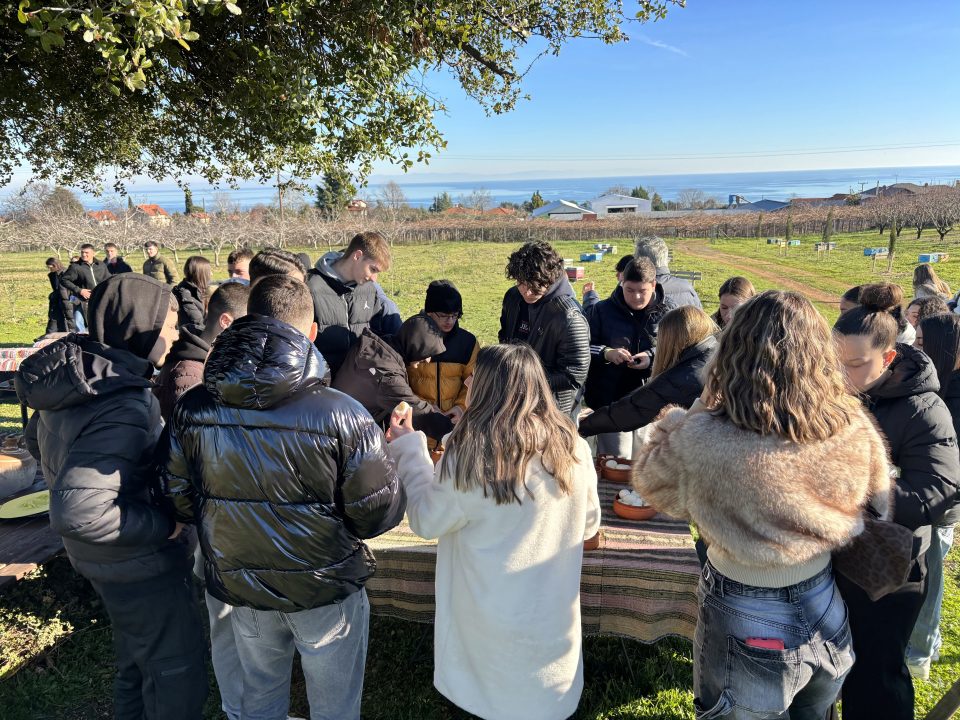
During the visit, students were guided through the estate and introduced to the full range of farm activities, including the operation of traditional agricultural tools. They also had the opportunity to taste different varieties of honey and pollen, learning about the unique characteristics of each product. A discussion on sustainable agriculture and the impacts of climate change highlighted the farm’s ecological practices and commitment to chemical-free production. During the visit, students also learned about the farm’s sustainable field management practices, including the use of geese and guinea fowl for natural weed and pest control in the olive groves, an approach that reduces reliance on chemicals and supports biodiversity.
Tzanakoulis Farm: A Modern Vineyard and Winery Demonstrating Sustainable Agricultural Innovation
The second location visited by students was Tzanakoulis Farm, located near Larissa. The farm represents a compelling example of how modern agriculture can combine tradition with innovation, while maintaining a strong commitment to sustainable production and rural development.
Tzanakoulis Farm has a history that dates back to 2006, when the first vineyard was established on a 2.5-hectare plot near the village of Mesorrachi, close to the city of Larissa. The farm is a family-owned business, led by the father and supported by his two children, both of whom are young and actively shaping the farm’s future. The daughter, who manages production, brings a modern and dynamic approach to the farm’s operations, while the son oversees exports and helps connect the farm to wider markets.
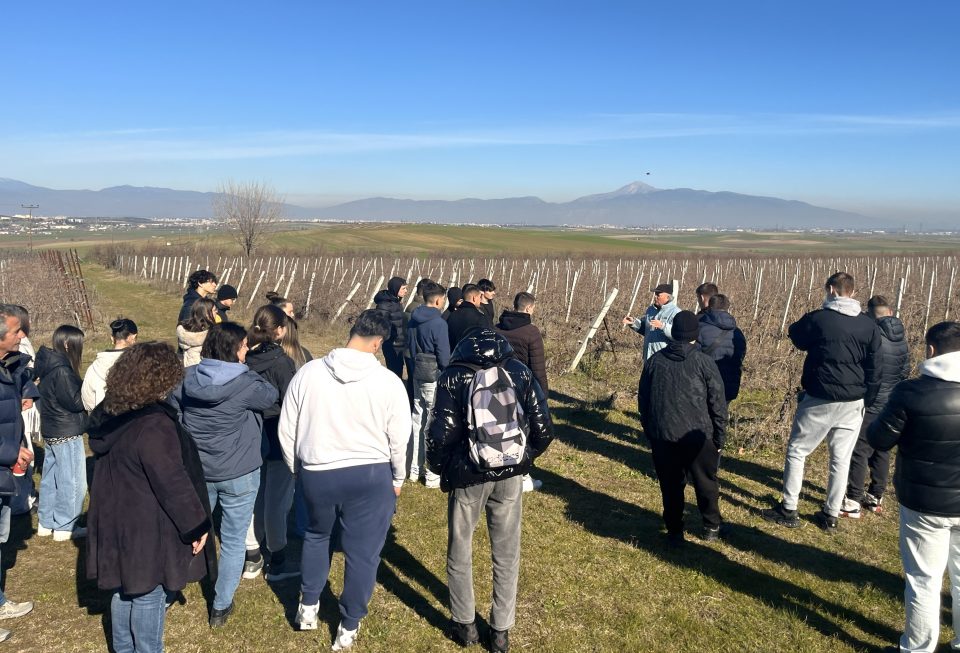
From the outset, the farm adopted an organic approach, cultivating both international and native Greek grape varieties. The vineyard includes cosmopolitan French varieties such as Cabernet Sauvignon, Syrah, Merlot, and Chardonnay, alongside celebrated Greek varieties including Xinomavro, Malagouzia, and Assyrtiko. In parallel, the farm also experimented with other fruit crops such as fig, plum and pomegranate, producing high-quality jams from their fruits.
During the visit, students toured the vineyard and observed the grape cultivation process, gaining insight into the practical requirements of modern viticulture. They then visited the farm’s fully equipped winery, a two-level facility covering approximately 400 square metres, where they were guided through the entire wine production process. The winery tour provided students with detailed explanations of each stage, including fermentation, ageing, and bottling, enabling them to understand the technical and quality standards involved in transforming agricultural raw materials into a marketable product. The experience offered students a clear demonstration of how agricultural production and processing can be integrated within a single farm, strengthening local value chains and supporting rural economic development.
A key element of the visit to Tzanakoulis Farm was an interactive learning exercise designed to help students apply CAP principles in a practical and creative way. After touring the vineyard and winery, students formed small groups and were invited to create their own wine brand, taking into account the core priorities of the CAP: sustainability, local production, quality and support for farmers. During the preparation phase, students chose a name for their wine and decided whether it would be positioned as organic, traditional, premium or another category, reflecting on how CAP support could help them develop and promote the product. Students were also encouraged to consider how sustainable practices, such as reduced pesticide use or organic fertilisation, can influence the final taste.
In addition, each group created a short narrative about the origin and production of their wine, highlighting either innovation or tradition. They explained how CAP-supported or sustainable farming practices could be applied, including methods such as water recycling, organic cultivation or biodiversity protection. They also reflected on how CAP support for local farmers can improve distribution and accessibility, making local products more competitive in the market.
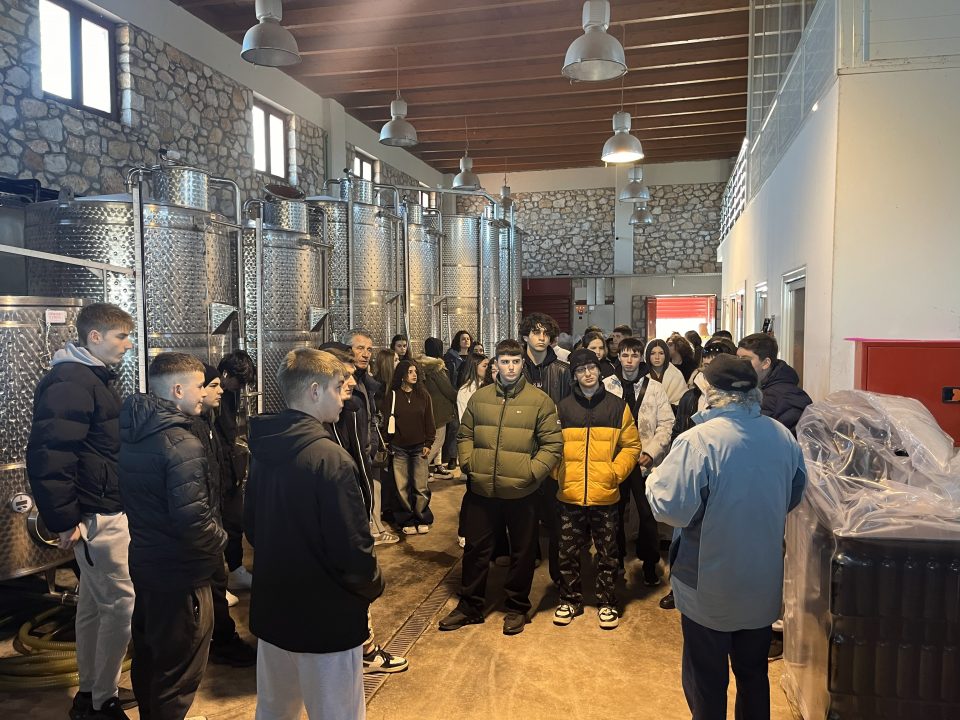
Students then decided on the price category for their wine, whether low, medium or premium, and justified their choice based on production costs, quality and market positioning. The activity concluded with each group presenting their wine concept to the rest of the students and discussing how CAP measures influenced their decisions. This was followed by a reflective discussion on sustainable practices and the role of the CAP in supporting small and local producers. The exercise transformed the visit into a hands-on learning experience, enabling students to connect policy with practice and understand how CAP instruments can support sustainable rural development, quality production and innovation in agriculture.
These farm visits provided students with an invaluable opportunity to connect classroom learning with real-world agricultural practice, demonstrating how the principles of the Common Agricultural Policy are applied in modern farming. The visits also highlighted the importance of generational renewal in agriculture, showcasing the role of young farmers, especially young women, in driving innovation, sustainability, and rural development. By experiencing firsthand the daily reality of sustainable farming, students gained a clearer understanding of how CAP supports environmentally responsible production, strengthens local value chains, and helps build a competitive and resilient agricultural sector in Europe.