



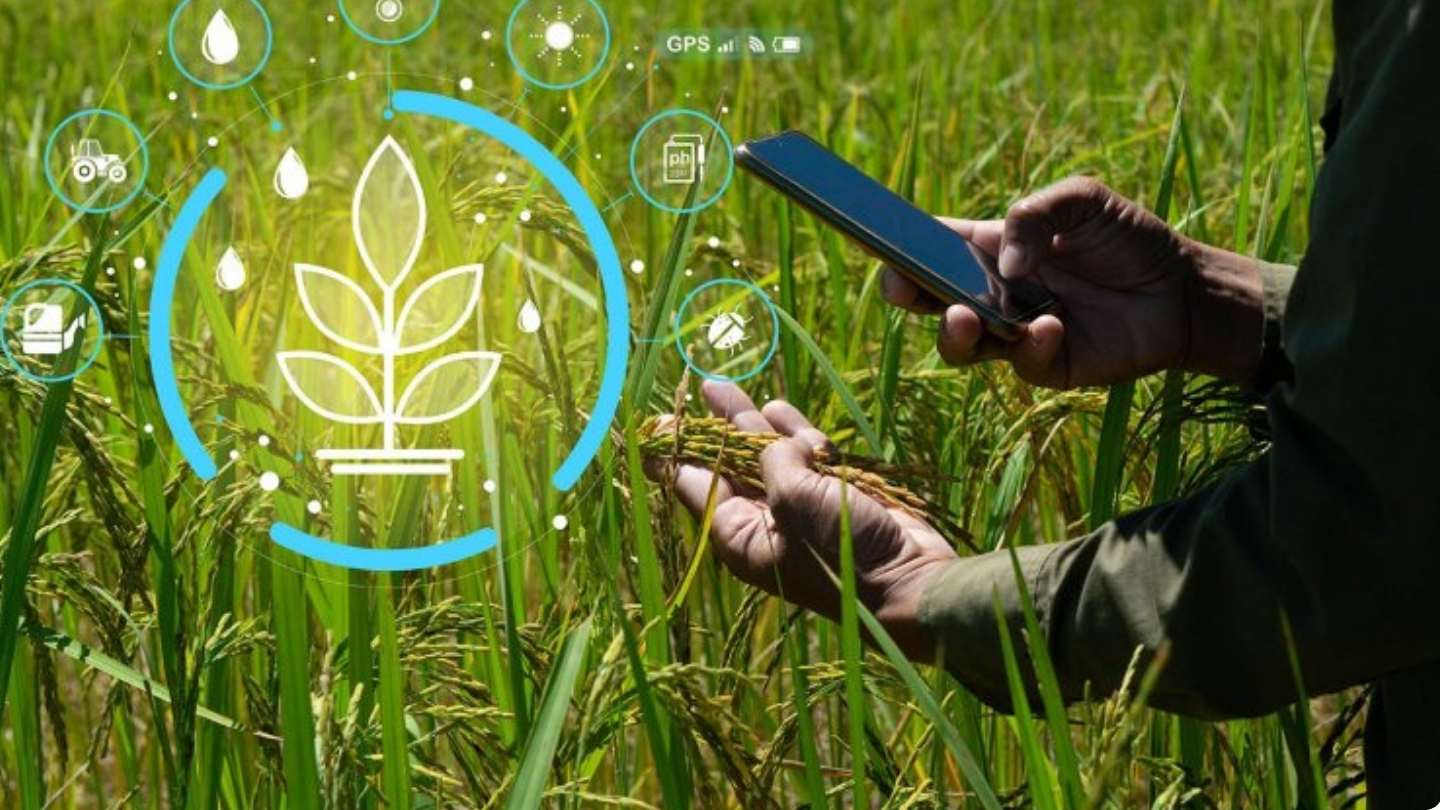
The CAP and the Digital Transformation of Agriculture
Technology has fundamentally reshaped almost every aspect of social and economic life. Advances in fields such as robotics, artificial intelligence and digital applications have demonstrated how everyday activities including agricultural practices can be carried out more efficiently and accurately.
Today, farmers can use drones to monitor crops and detect diseases or irrigation problems early. Sensors and weather applications help them decide when and how much to irrigate or fertilise, reducing waste of water and agrochemicals. Precision farming is already widely used, ensuring that pesticides are applied only where necessary, lowering both costs and environmental impact. Harvesting robots and automated milking systems reduce physically demanding work, while 5G networks enable real-time data collection and analysis, even in remote rural areas.
However, the shift to this new, “smarter” form of agriculture is far from straightforward. Not all farmers can easily adopt and benefit from innovative solutions, as these often involve high upfront costs. Some rural areas also lack stable, high-speed 4G or 5G networks, which are essential for these technologies. Such barriers risk creating new inequalities within the farming community.
Farmers — particularly young and small to medium-sized producers — therefore need support, investment, modern infrastructure and access to knowledge to benefit equally from the digital and technological transformation. This is where the Common Agricultural Policy (CAP) plays a crucial role, helping farmers navigate this transition and ensuring fair access to opportunities.
The CAP does more than encourage farmers to “go digital”; it provides the funding, expertise and networks needed to turn this transition into reality.
The CAP supports farmers through:
Investment support:
This assists farmers in acquiring precision farming equipment, drones, soil and weather sensors, smart irrigation systems, farm management software, and robotic or automated machinery.
For example, through the LEADER, the CAP supports the digital transition at a local level. Local Action Groups can fund small- and medium-scale investments, pilot projects, and partnerships that bring innovation directly to farmers, including digital tools, smart applications, and technological solutions tailored to the specific needs of each region. In many cases, the CAP covers a significant portion of the investment costs, making these new technologies affordable for all farmers.
Training and advisory services:
The CAP provides farmers with access to agricultural advisors, training programmes, and practical workshops that help them use digital tools effectively.
A key part of this support is AKIS (Agricultural Knowledge and Innovation Systems). AKIS connects farmers, advisors, researchers, and innovative businesses, ensuring that new ideas are quickly and effectively translated from research into practical use on the farm. It also funds training, advisory services, and collaborative initiatives, allowing farmers to test and adopt new solutions with confidence.
Through these measures, the CAP not only supports the present of European agriculture but also actively shapes its future — making the sector more attractive, innovative, resilient, and equitable for all.