What do we do
We are living through a period of deep transformation unprecedented in recent human history. Across Europe and beyond, societies are adjusting to multiple structural shifts unfolding at the same time.
These transformations are widely recognised. What is less often acknowledged is the strain they place on institutions, sectors and public debate — and how similar these strains look across very different policy domains.
Four transformations are particularly consequential:
- Geopolitical transformation: Shifting power relations, renewed conflict, and growing uncertainty around security and globalisation are challenging long-standing assumptions about stability, cooperation and strategic dependence.
- Ecological transformation: Climate change, biodiversity loss and environmental degradation are forcing societies to rethink economic models, production systems and patterns of consumption — often under conditions of urgency and incomplete knowledge.
- Technological transformation: Digitalisation, artificial intelligence and data-driven systems are rapidly reshaping work, governance and decision-making, raising questions about control, accountability and human agency.
- Social and cultural transformation: Demographic change, inequality, identity dynamics and declining trust in institutions are reshaping how people relate to authority, expertise and one another.
Together, these transformations are generating similar pressures across all sectors — from agriculture and energy to health, security, development and digital policy.
Institutions face rising contestation, stakeholders talk past one another, and debates become increasingly polarised.
These dynamics are not signs of failure or poor governance. They are structural features of governing in an era of transformation.
“If ever there were a time to upgrade our narrative software – to reimagine growth, innovation, the news ecosystem or democracy, it is now. “
Erika Staël von Holstein
A strategy for change
Periods of deep transformation place societies under conditions they were not designed for.
Reality changes faster than the ways we interpret it, govern it and act upon it.
As Abraham Lincoln observed during another period of profound transformation, “The dogmas of the quiet past are inadequate to the stormy present.” When inherited ways of thinking no longer align with lived reality, societies struggle to respond effectively. Evidence no longer persuades, disagreement hardens into polarisation, and institutions experience growing strain.
This happens not because change is impossible, but because the different layers through which change must pass fall out of alignment.
In periods of transformation, durable change requires work at four interconnected layers. When any one of these is neglected, efforts stall or backfire.
At Re-Imagine Europa, we work with four interconnected layers to make this transformation happen:
- Decoding narratives, emotions, and cognitive frames
- Engaging stakeholders and harnessing the power of disagreement
- Working with experts and policymakers to design robust policy recommendations
- Working with leaders and decision-makers to deliver change
Let’s start the conversation!
—————————————————————–
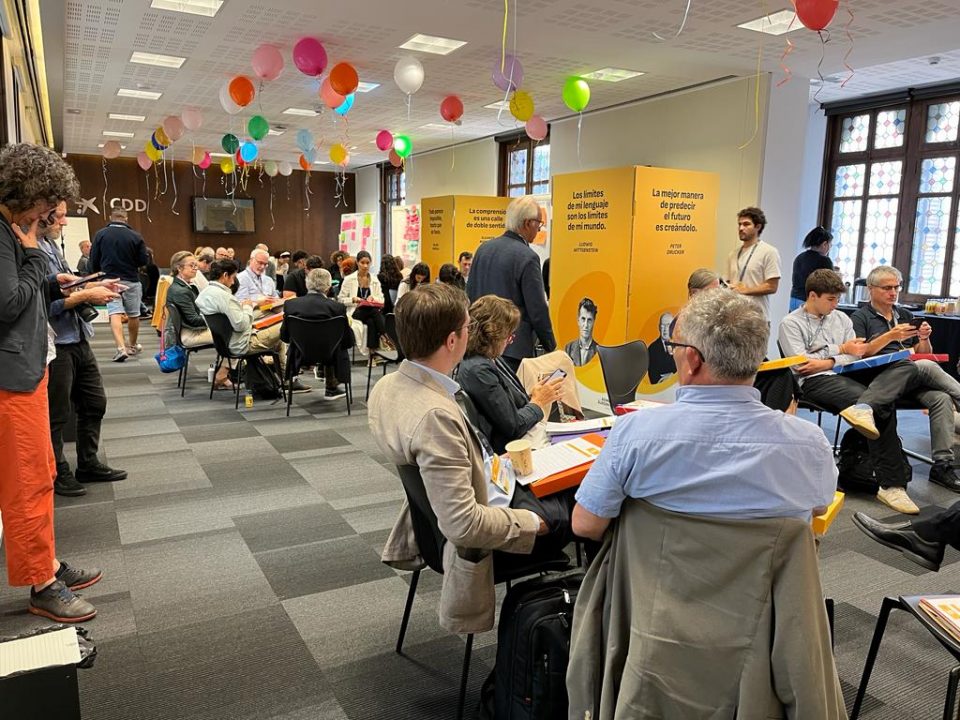
Decoding narratives emotions, and cognitive frames
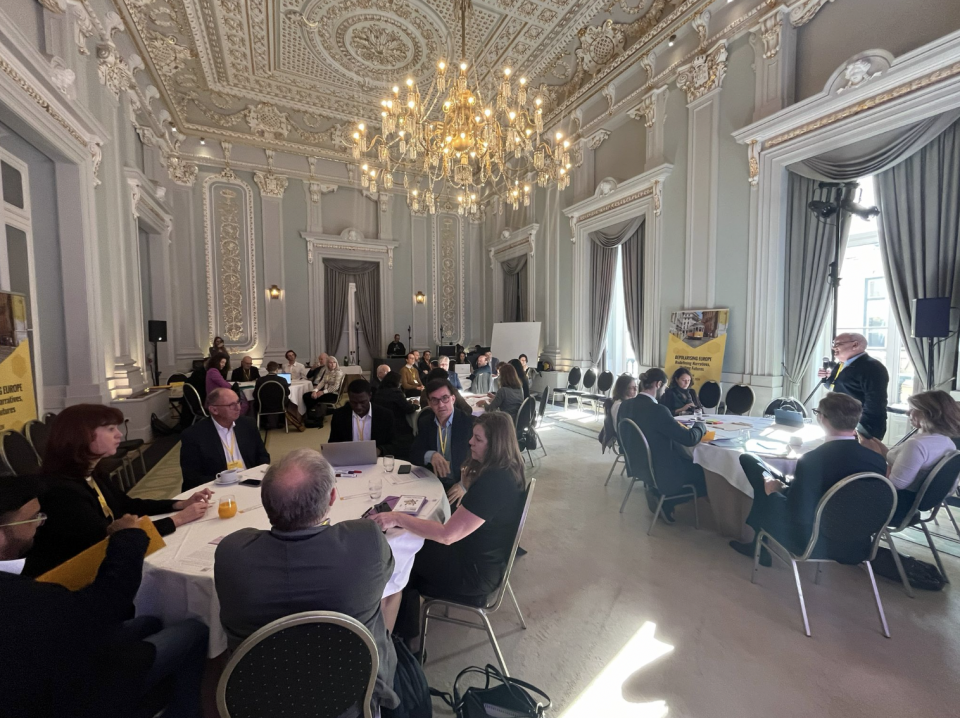
Engaging stakeholders to harness the power of disagreement