
Why AI Needs a New Story: Reclaiming Europe’s Agency in the Age of Artificial Intelligence
Artificial intelligence is changing the way we live and work, but across Europe, the conversation surrounding its development is increasingly marked by uncertainty and concern. From protests against data centres to fears about energy consumption, the concentration of technological power and the impact of AI on everyday life, many people are questioning not only what this technology will bring, but who it will ultimately serve.
Behind these concerns lie deeper questions about trust, fairness and people’s ability to influence the changes shaping their lives. For Europe, the question is how to move beyond a debate dominated by fear and build a shared vision of the future we want.
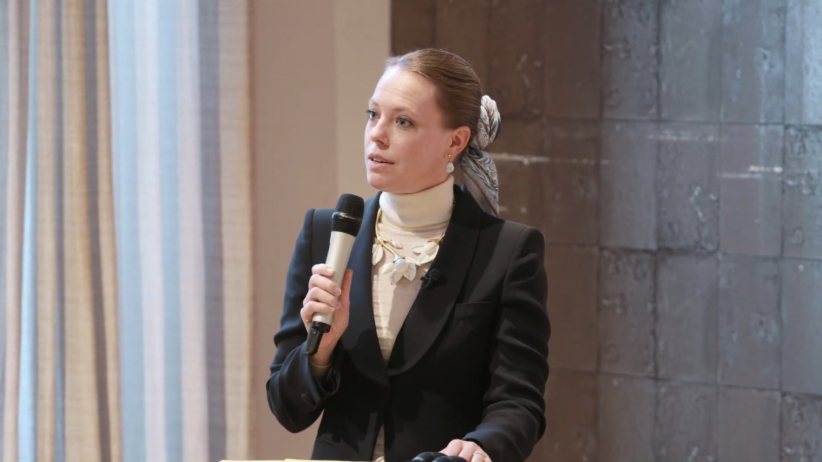
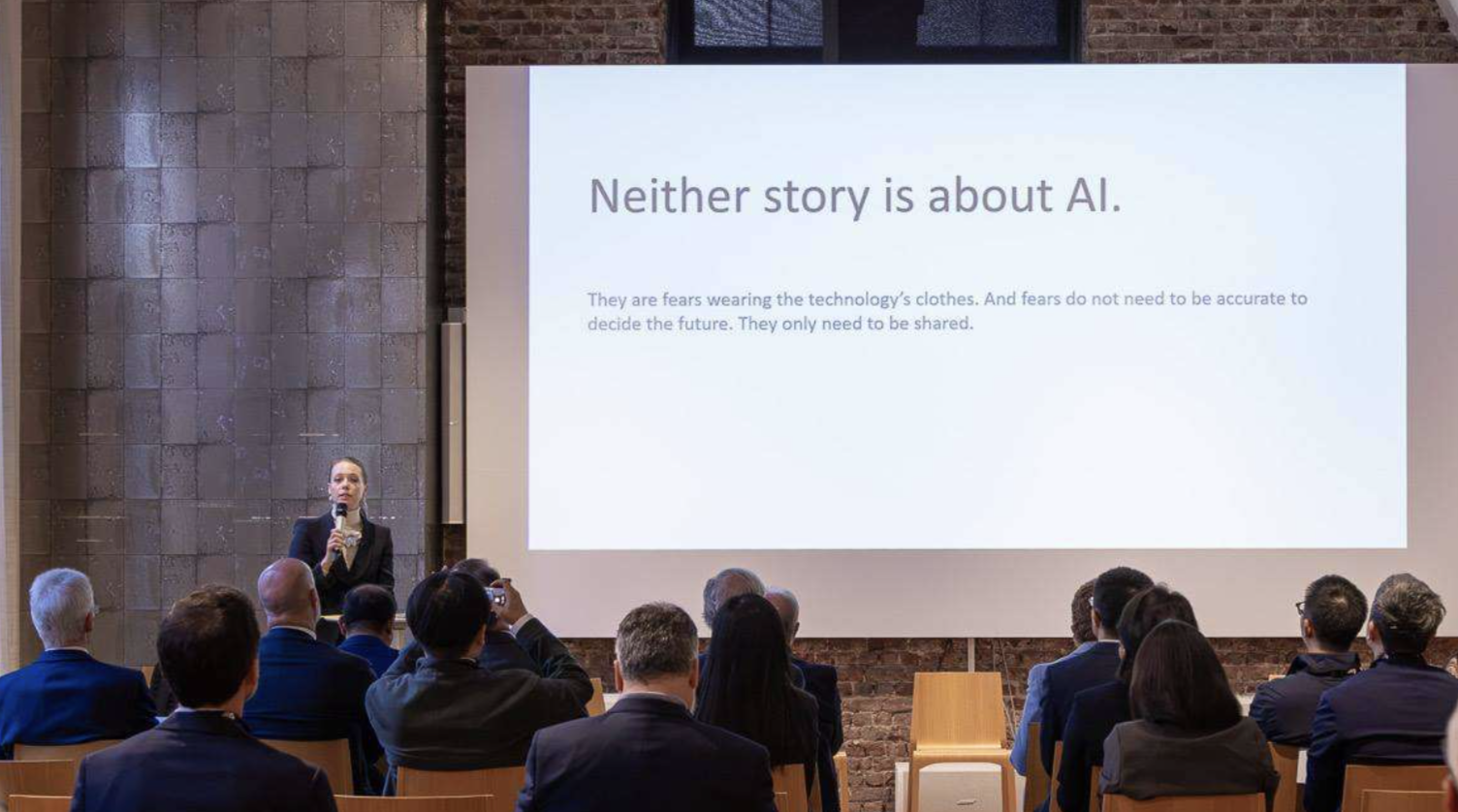
In her recent intervention at the Digital with Purpose Summit, Erika Staël von Holstein, Chief Executive of Re-Imagine Europa, explored this question through RIE’s research into the narratives shaping the European AI debate. Her central argument claims that the stories we tell about technology influence how we understand it, how we respond to it and, ultimately, how we shape its future, emphasising that “this is not a story about AI. This is a story about how people see the world going, the direction, the trust they have in government.”
Understanding the stories behind the AI debate
Narratives are more than communication strategies or attempts to persuade public opinion. They are the underlying frameworks through which people make sense of the world, shaping what they see as possible, whom they trust and what they expect from the future. “People tend to think that narratives are tools for persuasion”, Staël von Holstein explained, “but narratives are actually much better as tools for listening.”
Understanding public perceptions of AI therefore requires more than looking at opinions about specific technologies. It means listening to the concerns, experiences and expectations behind them.
To explore these perspectives, the European Narratives Observatory combatting Disinformation in Europe Systemically (NODES)—led by Re-Imagine Europa’s research team—analysed hundreds of thousands of posts from different stakeholders across European media. The research identified seven distinct narrative communities: AI as a threat to people’s lives; a geopolitical race; the next technology to govern; an ecosystem to cultivate; part of the European project; an everyday tool; and an unstoppable force.
Every one of these narratives reflects a different way of looking at AI. Some focus on its practical applications and potential, while others are concerned with global competition, governance or the consequences of technological change. Together, they show that Europeans do not share a single vision of what AI means or what it should become. The most constructive narratives, however, are also the least visible. The idea of AI as an ecosystem to cultivate, for example, is very present in national AI strategies but almost absent from public discourse.
Why fear has become such a powerful part of the conversation
One of the most significant findings is that the narratives of AI as an unstoppable force and as a threat to people’s lives are the two most prevalent in the European debate, and can reinforce one another. When people feel that AI development is inevitable and beyond their control, concerns about its consequences can become even more difficult to address. Fears that data centres will put pressure on local resources, or that technological progress will primarily benefit powerful interests, can deepen the feeling that decisions are being made without the people most affected having a say.
This is not simply resistance to innovation. It also reflects concerns about fairness, trust and control. Narratives do not just describe how people see the world; they can influence how they act. When the future is presented as inevitable, it becomes harder for people to imagine their own role in shaping it.
The persistence of these narratives over the past five years, despite developments in AI policy and governance, including the EU AI Act, points to a wider challenge. New rules and regulatory frameworks are important, but they do not automatically change how people feel about technological progress. Building trust also requires listening to public concerns and addressing the questions that matter to people.
Making AI’s potential matter in people’s everyday lives
Moving beyond fear does not mean ignoring the risks of artificial intelligence. It means making room for a more complete conversation, one that also considers what AI could make possible and how its benefits could reach more people.
One of the most compelling opportunities lies in access to knowledge. Humanity is producing more knowledge than ever before, but making sense of it and ensuring that it reaches those who need it remains a challenge. AI could help change this: imagine a farmer in Ghana or Poland being able to access the latest weather information, knowledge about seeds and practical advice that can support everyday decisions. This is one way to understand AI’s potential: not simply as a powerful technology, but as a means of making knowledge more accessible and useful.
For that potential to become meaningful, however, technological development must be connected to people’s real needs. The benefits of AI should not remain an abstract promise. People need to see how it can improve their lives, support their work and create opportunities for their communities.
Finding a shared European vision
To illustrate what a different story could look like, Staël von Holstein turned to Europe’s own history with coal and steel, industries that had fuelled two world wars. Rather than simply limiting them, the Schuman Declaration proposed placing them under shared management, turning industries that had helped fuel conflict into foundations for cooperation and peace. The challenge facing Europe today is different, but the underlying idea remains relevant: technologies and resources do not have to determine their own purpose. The way they are developed and governed can help shape what they contribute to society.
Artificial intelligence is often discussed through the lens of global competition or the risks it may bring, but Europe also has the opportunity to build a vision centred on shared progress, access to knowledge and the interests of its citizens. This will require bringing together people from different sectors, countries and backgrounds to explore what they want AI to achieve. It also means creating space for different perspectives, rather than assuming that a single vision can be imposed from the outset.
As Staël von Holstein argues, the choices made over the next five years will help define the story of AI for generations to come. The question is not simply what technology we want to build, but what kind of future we want it to help create.