
Madrid Manifesto for Responsible AI: the real race is to govern technology, so it serves democratic societies
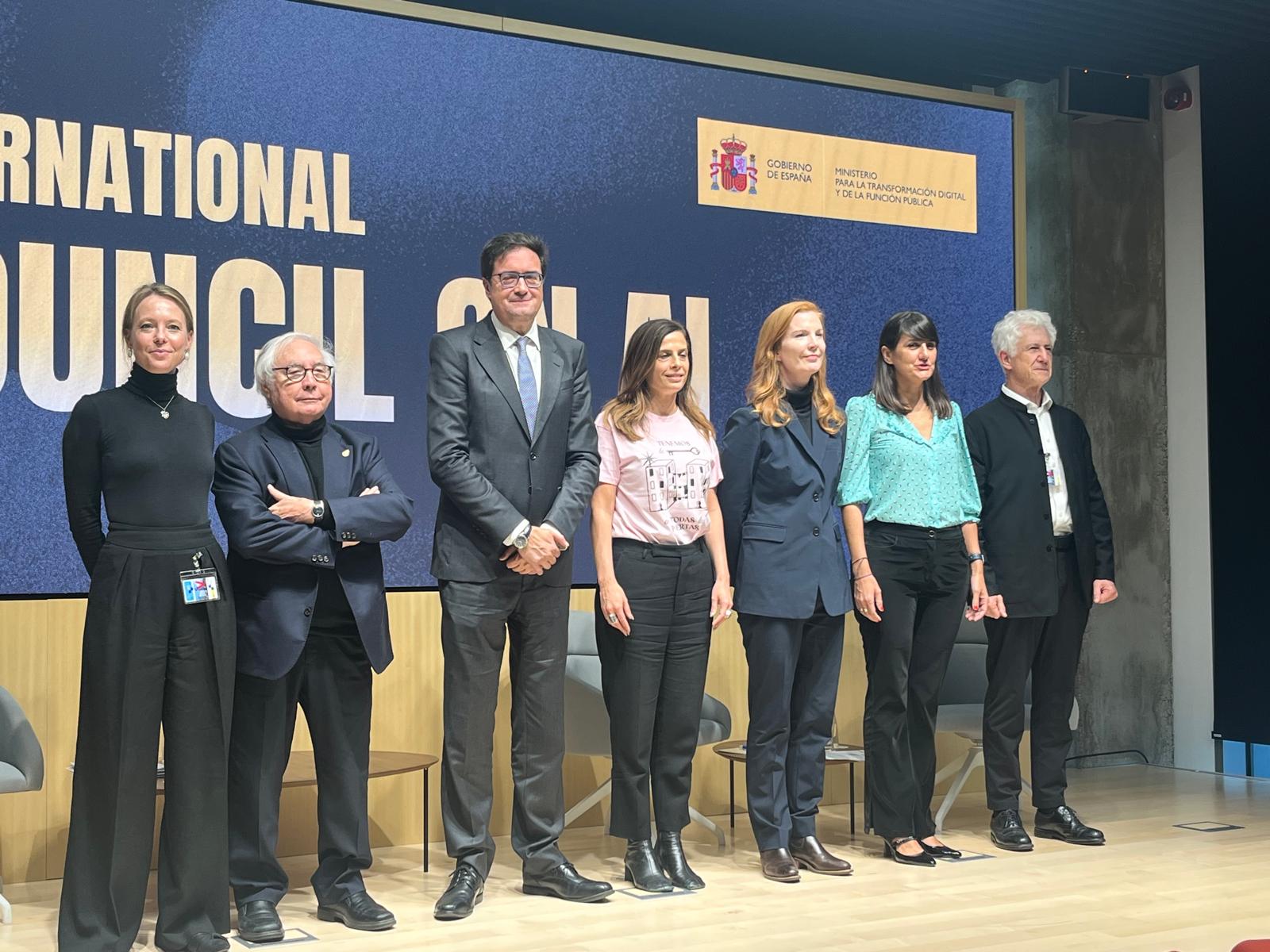
The International Council on Artificial Intelligence – of which Re-Imagine Europa’s CEO Erika Staël von Holstein is a member since its creation as an expert in AI and political polarisation – has published a manifesto in Madrid with a clear message: democracies, not a handful of big corporations, must decide what AI is for, and how we should regulate this technology to build the democratic societies that we want to live in.
For years, the story of artificial intelligence has been told as a sprint between tech giants racing to build ever larger, ever more powerful and competitive models. On 8 October, in Madrid, a group of some of the world’s leading thinkers on technology and society proposed a different story – and a different finish line.
The Madrid Manifesto for Responsible AI, presented by the International Council on Artificial Intelligence, argues that “AI is far more than a race to build the best model”. The real contest, the Council says, is to build the society best equipped to harness AI and share in its benefits. And it states plainly that self-regulation by industry is not enough to make AI serve the public interest: democratic societies have a legitimate role in shaping, governing and overseeing it.
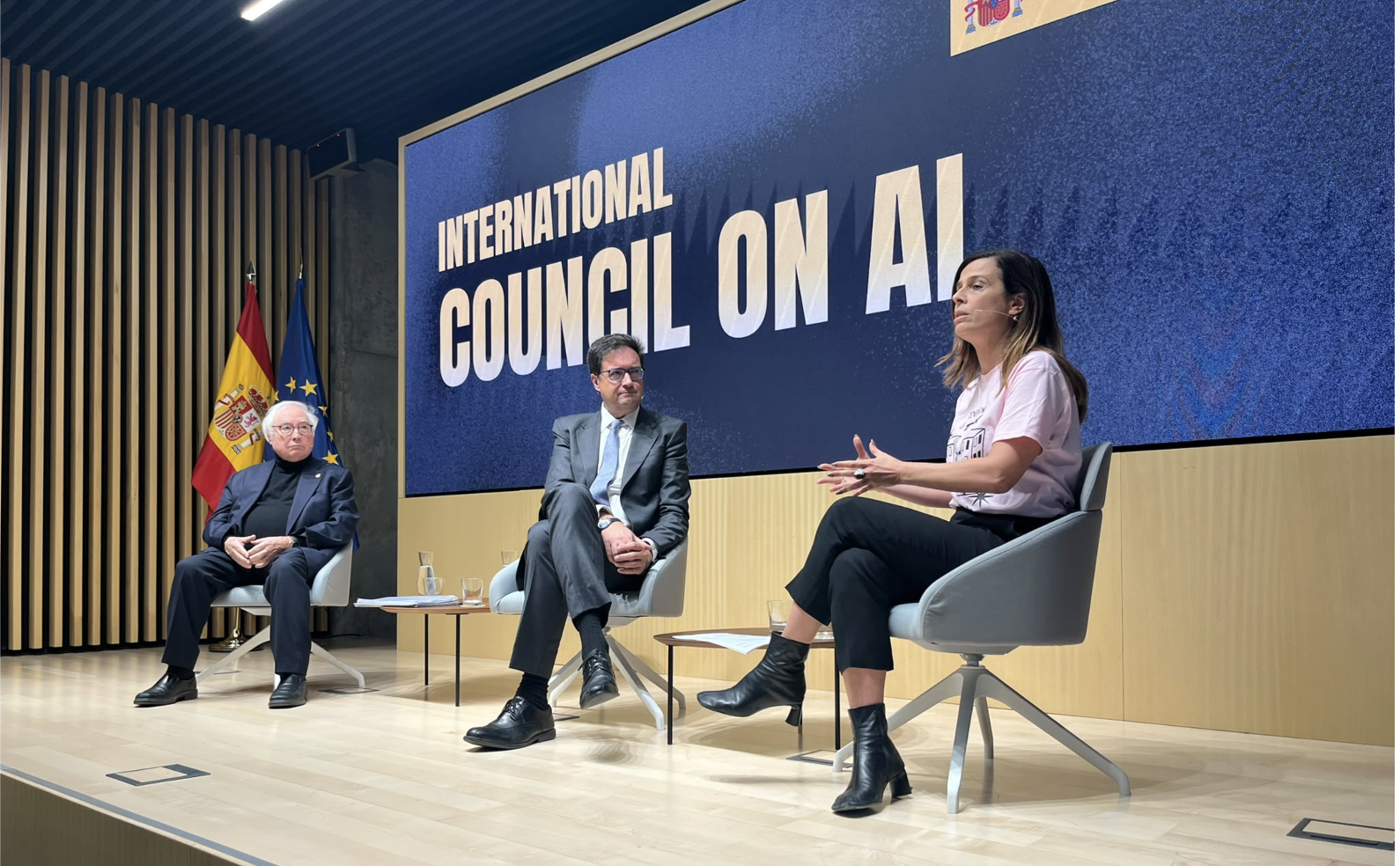
The Manifesto was presented by the Council’s chair, the sociologist Manuel Castells, member of RIE’s Advisory Board and head of our Democracy Task Force, and by digital-policy expert Francesca Bria, alongside with the Spanish minister for Digital Transformation and the Civil Service, Óscar López– The minister raised the Council’s work as valuable not only for Spain but for everyone around the world: the Council, he said, has become a global reference point on how to advise on, safeguard and assess AI, and its work will help shape the worldwide debate on technopolitics.
The Council was established by the Government of Spain in June 2024 to provide independent strategic advice on the long-term implications of AI. Its members bring together ethics, economics, sociology, computer science, digital governance and the cognitive sciences: Manuel Castells, Paul S. Adler, Francesca Bria, Vint Cerf, Kate Crawford, Jerome A. Feldman, Luciano Floridi, Erika Staël von Holstein, Jeroen van den Hoven, Niklas Lundblad, and Carissa Véliz.



Four pillars for a democratic AI
The Manifesto is built around around four primary pillars of action aimed at democratic oversight and governance:
1. AI at the service of people and the common good. Human rights must be built in by design and translated into verifiable technical requirements. AI may inform decisions that significantly affect people’s lives, but the decision – and the responsibility for it – must stay with an identifiable person or institution. Privacy is framed not only as an individual right but as a precondition for democracy. On children, the Council is unequivocal: protecting minors is not a brake on innovation but what makes innovation legitimate, and systems likely to reach young people should be independently assessed before they are deployed.
2. Sovereign and democratic AI. Digital sovereignty is defined as a necessary condition for democracy – not isolation, but autonomy, resilience and the capacity of societies to govern critical infrastructure according to their own laws and values. The Manifesto calls for strong public capacities across the whole AI value chain, open and interoperable ecosystems including open-weight models, and data that remains under the control of those who produce it. It also introduces the notion of cognitive autonomy: AI must not be designed to manipulate emotions and beliefs, simulate friendship or maximise engagement at the expense of people’s well-being and freedom of thought.
3. Inclusive, innovative and sustainable AI. Every use of AI must serve a legitimate purpose and be proportionate to its risks and resource costs. The Council calls for a ban on lethal autonomous weapons. It insists that the value AI creates should flow to the workers, creators, researchers and communities whose knowledge it draws on – including through shared productivity gains – and that Europe’s competitive strength lies in its millions of SMEs, start-ups and creators operating in open markets. It also demands transparency about AI’s physical footprint – energy, water, land and materials – and about who bears the financial risks of the infrastructure boom.
4. Responsible, transparent and trustworthy AI. As AI agents act ever more autonomously, the Manifesto calls for them to be uniquely identifiable, with responsibility always resting on an accountable person or organisation. Where high-risk systems cause harm, the burden of proof should shift to developers and deployers, victims should be able to seek redress collectively, and whistleblowers must be protected. Frontier and agentic systems should undergo independent evaluation before deployment, and public authorities – not only operators – must have the power to suspend or withdraw any system that escapes meaningful human control.
Many of the Manifesto’s concerns – the health of the public sphere, the risk of manipulation, the need for societies to retain the capacity to deliberate and decide together – lie at the heart of Re-Imagine Europa’s work. For years, we have studied how narratives, emotions and cognitive frames shape public debate, and how technology can either deepen polarisation or help build bridges across it.
Protecting how we think, talk and decide together
The Madrid Manifesto is part of an intense and growing body of work by Re-Imagine Europa on AI governance. Through projects such as Project GAIN – Global AI Impact Network, AI4Gov-X, SoBigData, ORBIS, MultiPoD and NeuroClima, and initiatives such as MagiX, which supports public-sector AI capacity, we convene policymakers, technologists and civil society to shape a distinctly European approach to AI: one that is competitive, but rooted in fundamental rights, transparency and democratic oversight. Our work on narratives and disinformation explores how AI is changing the information ecosystem – and how Europe can build resilience in response.
The Manifesto ends on a note of agency: the future of AI is not predetermined, and the choice of what kind of AI we build remains ours to make.
The race that matters most has only just begun, and Re-Imagine Europa will be there at every stage, working to turn the Madrid Manifesto’s principles into reality.
Read here the full Madrid Manifesto for Responsible AI
Learn more about our work on AI: re-imagine.eu/our-topics/artificial-intelligence